Latest Breakdowns

  • Skate Sharpening Explained: Choosing the Right Hollow

    Skate Sharpening Explained: Choosing the Right Hollow

    Sharp is the wrong word for most of what happens at a skate sharpener. The wheel doesn’t put a point on the bottom of your blade the way a whetstone puts a point on a knife. It grinds a shallow concave groove down the length of the steel, and what’s left standing on either side of that groove are your two edges. Everything you feel on the ice — bite, glide, how hard you have to lean to hold a turn — comes out of the shape of that groove.

    The number the shop quotes you describes the groove, not the sharpness. A half inch, five-eighths, three-quarters: those are the radius of the circle whose arc got cut into your steel. Radius is the distance from a circle’s centre to its outer edge, and the hollow is the concave groove ground into the skating surface, so radius of hollow just means how deep the cut is. A small radius carves a deep, narrow groove and leaves two edges that dig hard. A big radius leaves the blade bottom almost flat, with edges that skim.

    This is why “can you make them sharper?” is usually the wrong question at the counter. A freshly cut three-quarter-inch hollow has edges every bit as keen as a freshly cut half inch. It simply presents them to the ice at a gentler angle. If your skates feel dull, the honest answers are usually that the edges are rounded from use, that one edge is higher than the other, or that the hollow you’re on doesn’t suit your weight.

    What the depth difference actually measures out to

    The numbers sound bigger than they are. A hockey blade is roughly three millimetres wide at the bottom. Cut a half-inch hollow into it and the deepest point of the groove sits about nine hundredths of a millimetre below the edges. Go to five-eighths and that drops to about seven hundredths. The difference between the two most common hollows in hockey is under a thousandth of an inch. That’s about a fifth the thickness of a sheet of printer paper.

    So why does the change feel so obvious underfoot? Because depth isn’t the lever. Angle is. On a half-inch hollow, the edge meets the ice tilted at roughly seven degrees. On five-eighths it’s closer to five and a half. On a full inch it’s about three and a half. That angle decides how easily the edge knifes into ice instead of sliding across it. Small changes in it produce large changes in how much you have to commit to a turn before the skate holds.

    It also explains why the step between adjacent hollows gets smaller as you go flatter. Moving from 3/8″ to 1/2″ is a far bigger change in feel than moving from 7/8″ to 1″. If you’re experimenting down in the deep end, take smaller steps.

    Weight does more of the work here than skill does

    The standard shop starting point is body weight, not ability. Youth players, carrying less weight, tend to be comfortable on a 1/2″ hollow, while high school and older players generally settle around 5/8″. The reasoning is simple. Edge bite depends on how much pressure you put through a very small contact patch. A 210-pound defenceman drives the same edge into the ice much harder than a 90-pound peewee does.

    That’s also why heavier players often end up flatter than they expect. A shallower 5/8″ still lets a big player grab enough edge to turn and stop, while leaving more of the blade riding above the ice for glide. The common mistake is a 200-pound beginner asking for a deep hollow because he feels unstable, then fighting his own skates all winter. Deep hollows punish sloppy weight transfer. They grab when you wanted to slide, chatter on hard crossovers, and bleed speed on every glide.

    There’s no rule that pros skate flat, either. There are plenty of heavy professionals still skating on 3/8″ hollows simply because that’s what feels right to them. Feel wins. The chart is a starting point, not a verdict.

    Rink temperature can move you a full step without warning

    Ice hardness changes what a given hollow does. Cold, hard, well-maintained ice is slicker and gives your edges less to bite into, so the same skates feel loose. Soft ice in a warm summer rink grabs more on its own, and a deep hollow on top of that feels sticky and slow. The usual adjustment is to go shallower on soft ice for glide, and deeper on hard ice for control.

    For most beer leaguers this is theory. If you skate at three rinks and get sharpened once a month, chasing ice conditions is a waste of money. It matters for two groups: people who own a home sharpener and can change hollows between sessions, and people whose home rink swings dramatically between a February morning and an August evening. If your July stops feel like landing in sand, that isn’t your conditioning. Try going one step flatter for the summer.

    What the flat bottom cut trades, and what it doesn’t

    The other option on most shop menus is the flat bottom cut. Developed by Blackstone, it replaces the half-moon groove with a flat centre and two edges standing up like fangs at the sides. The idea is that the flat section rides the ice and carries your weight, so the edges can be aggressive without the whole blade sinking in. The grip-versus-glide balance depends on both the width of that flat section and the height of the edges above it, which is why these cuts get quoted as two numbers, with 100/50 and 90/1 among the most common.

    It is not free performance. The edges on a flat bottom cut are thinner and more exposed, so they can round off faster, and the cut is less forgiving of a shop that doesn’t keep its equipment dialled in. Plenty of players try it, love the first three skates, and then find they’re sharpening more often than before. Worth testing. Not worth treating as an upgrade.

    Running the experiment without wasting a season

    Change one thing at a time, and give it at least three skates. Your first session on any new hollow tells you almost nothing, because a fresh grind leaves a tiny burr that makes everything feel grabby for twenty minutes. Judge on the second and third outings.

    Keep a note of what you’re on. Shops write it on the receipt, and a surprising number of players have no idea what their last three sharpenings were. Without that record you’re not experimenting, you’re just guessing.

    Learn the two failure modes. Too deep feels like the ice is holding onto you. Stops bite abruptly, turns hook tighter than you asked for, and you’re gassed by the second period. Too shallow feels like ice that’s been polished. Your feet wash out at the top of a crossover and hard stops turn into slides. If you can name which one you’re feeling, you know which direction to move.

    Check your edges yourself before blaming the hollow. An uneven grind — one edge taller than the other — mimics every symptom of a wrong hollow, and it’s common. A pocket edge checker like the Sweet Stick takes ten seconds and also knocks down small nicks between sharpenings.

    One more distinction worth keeping straight. The hollow is the groove across the blade. The profile, sometimes called the rocker, is the curve along its length, and it controls how much steel touches the ice and where you balance front to back. They’re separate measurements, and people conflate them constantly. Goalies in particular usually want very flat hollows for lateral push and glide, which fits with how differently the position loads its edges compared to a skater’s, right down to the gear they wear.

    Start at the weight-based number. Move one step at a time, in the direction your mistakes are pointing. And when you find the one that disappears under your feet, write it down, because that’s the only number you’ll ever need to say at the counter.

    Photo by Pavel Danilyuk on Pexels
  • Why Goalies Wear So Much Gear: Hockey Equipment Guide

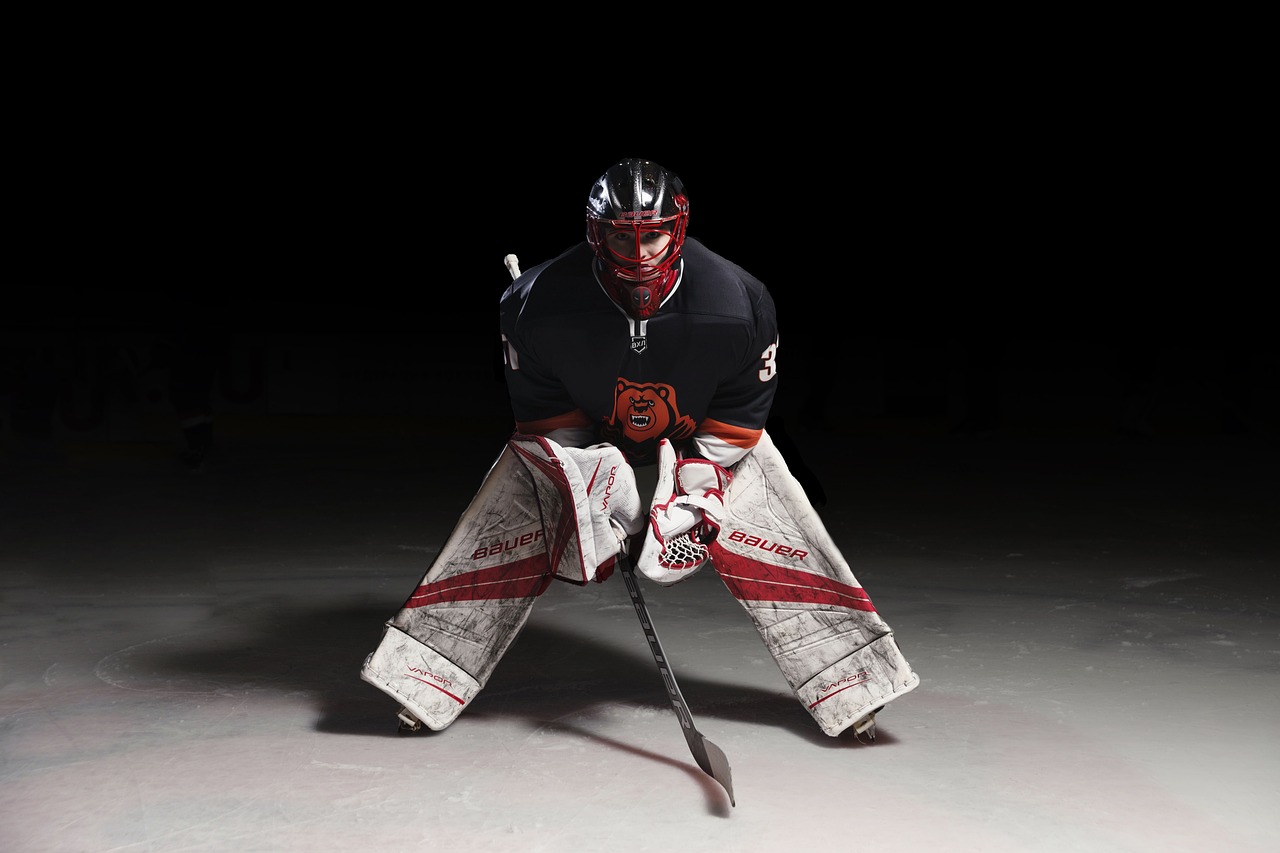
    Why Goalies Wear So Much Gear: Hockey Equipment Guide

    Put a radar gun on an NHL practice and you’ll get numbers that sound made up. A hard point shot from a defenseman crosses the 50-odd feet between the blue line and the crease in roughly a third of a second, and it arrives as a six-ounce disc of vulcanized rubber with a hard edge. A skater who takes one off the shin guard limps to the bench. A goaltender takes forty of them in a practice, from every angle, and is expected to be square to the next one before the rebound settles.

    That’s the whole answer in miniature, but it isn’t a very satisfying one, because it doesn’t explain the specific shapes. Why is a chest protector built like a piece of body armor while a forward’s shoulder pads are a vest you could wear under a hoodie? Why does a leg pad have a flat face and a stiff outer roll, when a shin guard is a curved shell that wraps the leg? Why does a goalie glove have a cuff the size of a dinner plate and a skater’s glove is essentially a padded mitten?

    Every one of those differences traces back to two questions: what is this piece of equipment expected to absorb, and what is the player wearing it expected to do afterward. Skaters are protected against incidental contact — a puck they didn’t see, a stick across the forearm, a hit into the boards. Goaltenders are protected against the sport’s primary action, repeatedly, on purpose, and they have to keep working while it happens.

    Absorbing a puck is a different job from surviving one

    A skater’s gear is built to spread a single impact over a wider area and get the energy into foam before it reaches bone. That’s enough, because the impact is unusual. Goalie gear has to do that and then control where the puck goes next, which is a completely separate engineering problem. A shin guard that flings a rebound into the slot is a perfectly good shin guard. A chest protector that does the same thing is a bad chest protector.

    That’s why goalie padding is layered in a way skater gear isn’t — a dense outer face that kills the puck’s bounce, softer foam behind it that takes the sting out, and a stiff internal structure that keeps the whole thing from folding in on the body. It’s also why the outside of a modern leg pad is flat rather than rounded. A flat face sitting perpendicular to the ice in the butterfly seals more of the bottom of the net and sends pucks outward rather than straight back to the shooter’s stick. The rolled edge on the outside of the pad isn’t decoration; it’s the piece that steers pucks toward the corner.

    The skaters aren’t underprotected, they’re differently protected

    Position-by-position, the gear diverges more than most fans notice. A stay-at-home defenseman who blocks shots for a living tends to wear larger shin guards with more coverage down the ankle and around the calf, plus shot-blocking inserts on the skate itself — the plastic guard that wraps the outside of the boot, which almost nobody wore twenty years ago and most NHL defensemen wear now. Their gloves usually have a hard thumb and reinforced backhand, because the puck finds hands at the point.

    Forwards trade coverage for mobility almost everywhere. Lighter shoulder caps, shorter elbow pads, gloves with more flex in the cuff so the wrists move freely on a shot. A skill forward often wears shoulder pads a physical winger would consider a rumor. Nobody makes them; it’s a private bargain each player strikes between getting hurt occasionally and being slightly slower all the time.

    Goalies can’t make that bargain. They’re in the line of fire on essentially every offensive possession, so the calculation is never “will I get hit” but “how many times tonight.” When your exposure is guaranteed, you stop optimizing for the rare impact and start optimizing for the hundredth one.

    The rulebook, not the goalie, decides how big the gear gets

    Left alone, goalies would wear more. They did, for about fifteen years. Chest protectors ballooned, sweaters hung loose over the top, and leg pads grew until scoring collapsed — in 2003-04, teams averaged just 2.57 goals per game, the lowest figure since the mid-1950s, against a 1980s decade that never dipped below 3.67.

    The corrections came in waves. An across-the-board reduction of roughly eleven percent arrived for 2005-06. Leg pads were eventually capped at 11 inches wide and 38 inches long, with the length scaled to each goalie’s measured height rather than issued as a flat maximum — a six-foot-six goaltender and a five-foot-eleven goaltender no longer get the same pad. Then came pants, and then, back in 2018, the chest and arm protector, which had quietly become the biggest offender.

    That rewrite is worth understanding because it set the design language still in use. The governing idea, as the league described it at the time, was to build gear that mimics the shape of the body underneath it without reducing actual protection — stripping material from places where there’s no body part behind the padding. The result is a rule with genuinely fussy specifics: bicep and forearm padding has to taper down the arm rather than run as a uniform slab, and the floating pads over the collarbone can rise only a couple of inches above the shoulder at the outer edge, tapering to almost nothing toward the neck. Amateur rulebooks mirror most of it. USA Hockey’s goaltender equipment rule caps the blocker at 8 by 15 inches and the catch glove at a 45-inch circumference, and specifies that shoulder cap padding can’t exceed an inch of thickness beyond the top ridge of the shoulder.

    There’s an enforcement wrinkle that makes these rules unusual: a chest protector legal on the hanger can become illegal on the goalie. If the shoulder protection gets shoved up above the collarbone when the goalie drops into a normal crouch, it’s illegal in that moment — the rule is written about the equipment as worn, not as manufactured.

    Fit is the part the size chart can’t give you

    Two goalies of identical height can need meaningfully different pads, because pad sizing is driven by the distance from ankle to knee and knee to mid-thigh, not overall height. Get it wrong and the knee lands off the knee block, which means the pad rotates late in the butterfly and leaves a gap along the ice — the exact seam shooters aim for.

    The boot, the bottom section that sits over the skate, is another quiet decision. A stiffer boot with a tighter strap rotates the pad fast and squares it to the ice; a looser one lets the goalie push off more naturally but costs a fraction of a second on the seal. Butterfly-heavy goalies tend to go tight. Goalies who play a more upright, skating-heavy style tend to go loose. Neither is wrong, and both feel awful to the other guy.

    None of this is quick to dial in, which is why new gear in September is a genuine competitive variable — something that matters more than usual in a compressed preseason where goalies are fighting for a limited number of starts. For coaches and parents trying to understand what a goalie’s setup is actually doing for their movement, Hockey Goaltending by Eli Wilson and Brian Van Vliet walks through the stance and push mechanics that gear either supports or fights.

    Where the standard advice stops applying

    Below the pro level the priorities invert. A beer league goalie facing shots that rarely crack 60 miles an hour is usually better served by lighter, more mobile gear than by maximum-coverage pads that tire them out by the second period. Youth goalies should be sized to their leg, not to the size they’ll grow into next year, because an oversized pad teaches a broken butterfly that takes years to unlearn.

    Neck protection is the one area where amateur rules have moved faster than the NHL’s. Mandates have spread across leagues since 2024, and rulebooks currently accept multiple certification standards — USA Hockey, for instance, is honoring one of the two recognized certifications only through the 2026-27 season before narrowing the requirement. Cut-resistant base layers for wrists and ankles have followed the same path, arriving first as a recommendation and then, quietly, as equipment nobody questions anymore.

    Photo by olegng on Pixabay

  • Icing vs. Offside: A Beginner’s Guide to Hockey Rules

    Icing vs. Offside: A Beginner’s Guide to Hockey Rules

    Hockey’s two most misunderstood stoppages look almost identical from the stands. A linesman’s arm goes up, play keeps going for a second or two, then a whistle, and everyone resets for a faceoff. No penalty, no goal, no obvious villain. If you’re new to the game — or you’ve watched for years without ever having the rulebook explained to you — icing and offside blur into one vague category of “the puck went somewhere it wasn’t supposed to.”

    They’re actually opposites in what they police. Offside is about players: it stops an attacking team from parking a forward behind the defense and waiting for a pass, and it’s enforced at the blue line. Icing is about the puck: it stops a defending team from relieving pressure by firing the puck the length of the ice, and it’s enforced at the far goal line. One is a limit on where bodies can be relative to the puck. The other is a limit on how far the puck can travel untouched.

    Once you sort out which line governs which rule, most of the confusion evaporates. What’s left are the genuinely tricky parts — the waved-off icings, the tag-up scrambles, the goals that come back off a video review — and those are worth understanding in detail, because they decide real games.

    The blue line rule cares about skates, and only skates

    Offside means an attacking player had both skates completely across the attacking blue line before the puck did. That’s the whole rule, and the details matter more than you’d think.

    Only skates count. A stick reaching into the zone is irrelevant; so is a shoulder, a leaning torso, or a helmet. If one skate is still touching the blue line — even a sliver of it, even on the very back edge — the player is onside. The blue line is a foot wide, and that width belongs to the neutral zone for offside purposes, which is why you’ll see wingers do a little tap-dance on the paint waiting for a teammate to carry the puck up.

    There’s also a subtlety the NHL added a few years back that saved a lot of goals: a skate lifted in the air above the blue line counts the same as a skate on it. Before that change, a player who came back to the line and hopped, or dragged a foot just off the ice, could be ruled offside on a freeze-frame even though his body was clearly behind the line. It was a rule that punished nothing anyone actually cared about.

    The puck carrier gets the same treatment in reverse. A player skating the puck into the zone has to keep the puck ahead of his skates — the puck must cross the line first. That’s why you see players make a small forward push with the puck at the line rather than carrying it in on their hip.

    When the linesman catches it in real time, play stops and the faceoff goes back outside the zone. But most offsides don’t get whistled immediately. If the attacking players are in the zone and the defending team has possession, the linesman raises an arm and lets it play: this is the delayed or tag-up offside. The attackers can clear the zone, “tag up” at the line, and come right back in with no stoppage. The catch is that they can’t touch the puck while the arm is up. Any attempt to play it — a poke, a shot, a forecheck on the puck carrier — ends the sequence instantly.

    Icing has more escape hatches than beginners expect

    Icing is called when a team shoots the puck from its own half of the ice — on or behind the center red line — and it crosses the opponents’ goal line without anyone touching it. That’s the base case. The exceptions are where it gets interesting, and most of them are reasons icing is not called.

    A team that’s short-handed, serving a penalty, is allowed to ice the puck freely. If the puck is shot directly from a faceoff, there’s no icing. If it deflects off any opposing player — stick, skate, glove, shin pad — the call is off, because that player had a chance at it. If the puck passes through the goal crease on its way down, icing is waved off. And if the goaltender leaves the crease or moves toward the puck in a way that suggests he was going to play it, the linesman can kill the call, which is why goalies who drift out and then change their minds get such an earful from their own bench.

    The biggest escape hatch is pure judgment. If the linesman believes a defending player could have played the puck before it crossed the goal line but chose not to — coasting alongside it, letting it go by to draw the whistle — icing is waved off and play continues. That’s a deliberate anti-gamesmanship provision, and it’s the source of a fair number of arguments.

    Then there’s the version of the rule nearly every league now uses, usually called hybrid icing. Instead of requiring a defender to actually touch the puck, the linesman judges a race to the nearest faceoff dot. If the defending player wins the race to the dot, or is even, the whistle goes and it’s icing. If the attacking forechecker gets there first, play continues and he can go chase the puck down. The whole point was to eliminate the full-speed foot races into the end boards that used to break legs and shoulders, while keeping the forecheck meaningful.

    The consequence of an icing is worse than beginners assume. The faceoff comes back to the offending team’s own end, and that team can’t change its lines — the same tired players who couldn’t clear the zone have to take the draw. The league tightened this further a couple of seasons ago, in the 2024-25 rulebook, by adding that the attacking team’s center also receives a warning for a faceoff violation after an icing, closing a loophole where the team with fresh legs could stall the draw at no cost.

    Only one of these two calls can be argued after the fact

    Here’s an asymmetry that surprises people: a goal can be taken off the board for an offside that happened ten seconds earlier, but never for a missed icing.

    Coaches can challenge a goal on the grounds that the attacking team entered the zone offside earlier in the sequence. The video has to show conclusively that the entry was illegal — the tie goes to the call on the ice — and a failed challenge costs the team a minor penalty for delay of game, which is why coaches don’t throw them away on hunches. Missed icing has no equivalent review. It’s a live-play judgment, gone the moment the whistle doesn’t blow.

    That review process is spreading. The WHL, one of the major Canadian junior leagues, is introducing offside challenges for this season with a twist: the linesman who made the original call reviews it himself rather than a central video room, and there are no automatic league-initiated reviews in overtime or the final minute — the team has to decide whether to risk the delay-of-game penalty. The challenge exists only for goals, where the defending team claims play should have been stopped for an offside at the blue line. College hockey is moving the same direction: a rules package for 2026-27 pulls NCAA men’s hockey closer to the NHL book on offsides, faceoffs and coach’s challenges, among other areas.

    The version you watched at the rink may not be the version on TV

    If you’ve been to a youth game and seen an immediate whistle on a play that would have been a harmless tag-up in the NHL, you weren’t imagining it. Amateur hockey has historically run stricter versions of both rules, and that’s been changing.

    In its 2025-29 rulebook, USA Hockey allowed older age groups to use the delayed, tag-up form of offside rather than an automatic whistle, and it also removed the automatic stoppage for shooting the puck on net with attacking players still in the end zone.

    Photo by Gera Cejas on Pexels

  • Canadiens Sweep Leafs: What Split-Squad Games Reveal

    Canadiens Sweep Leafs: What Split-Squad Games Reveal

    Two games, two cities, one night — and the Canadiens walked away from both. Montreal completed the sweep of split-squad games against Toronto with a 4-3 overtime win at the Bell Centre and a 4-1 result at Scotiabank Arena, which sounds like a statement until you remember it was September 19 and half the lineups were auditioning.

    Still, there’s signal in the noise. Cole Caufield finished a give-and-go with Lane Hutson in overtime to win the Montreal game, while Phil Danault scored twice in Toronto alongside goals from Maksymilian Szuber and Samuel Poulin. The Caufield-Hutson connection firing on day one of exhibition play is the kind of thing that tends to hold up, because chemistry between a shooter and a transition defenseman isn’t a conditioning issue — it’s a wiring issue, and that wiring was clearly intact.

    The goaltending picture is where split-squad results genuinely matter this fall. Jakub Dobes and Jacob Fowler shared the crease at home while Samuel Montembeault and Kaapo Kahkonen split the road game, with the four combining for 42 saves. That’s four netminders getting real reps in a single evening, which is exactly the point of a doubleheader in a compressed exhibition calendar — there simply aren’t enough games to hand everyone a clean look otherwise.

    Toronto’s night was about debuts more than results. Gavin McKenna, the No. 1 pick in the 2026 draft, played 23:39 with three shots on goal, while Darren Raddysh scored in his Leafs debut and Sergei Bobrovsky made 10 saves in his. Ice time like that for an 18-year-old tells you more about Toronto’s intentions than the scoreline does. Losing a September doubleheader costs nothing; finding out McKenna can handle top-line minutes is worth a lot.

    The more consequential Montreal news came off the ice. Kaiden Guhle is out four to five weeks after a minor procedure on his adductor, which thins a top four that was already going to lean hard on Hutson.

    So: a fun Saturday, a useful goaltending data point, and a blue line question that won’t resolve until October. Sweeps in September don’t bank points. They just tell you where to look next.

    Photo by Gera Cejas on Pexels

  • Gavin McKenna’s NHL Debut: Preseason Game Takeaways

    Gavin McKenna’s NHL Debut: Preseason Game Takeaways

    Gavin McKenna’s first taste of NHL game action came Saturday night at Scotiabank Arena, and it looked a lot like what you’d expect from an 18-year-old who has never been the youngest guy in the room before — flashes of the talent that made him the No. 1 pick, wrapped around a few reminders that this is a different league.

    Toronto didn’t ease him in. McKenna skated predominantly at left wing with John Tavares at center and William Nylander on the right, and drew 3:27 on the second power-play unit, the same alignment he’d practiced since camp opened Thursday. He finished with three shots on goal and no points. Late in the third, with the Maple Leafs trailing 2-1 and the goalie pulled for a 6-on-5, Jim Hiller sent McKenna over the boards — a fairly loud statement about where the coaching staff already sees him in the pecking order. Montreal held on and added to the lead.

    What stood out wasn’t the box score. Hiller pointed to a sequence where McKenna rounded the net and cut end-to-end through traffic, something he said he hadn’t seen much of from the Penn State freshman last season. The Canadiens’ goaltending bailed them out on a couple of looks. On the other side of the ledger: a hooking minor on his third shift, some turnovers McKenna flagged himself afterward, and at least one Grade-A chance in the first period where he held the puck a beat too long and never got it away.

    That self-scouting instinct may be the most encouraging part. McKenna called the starting-lineup introduction “pretty cool” and said he’d remember the day forever, but he walked out of the room talking about puck management rather than the ovation.

    The practical read: he’s not a project being stashed. Hiller kept PP1 intact for now, which is less a demotion than a reflection of a roster with established scorers — and of a compressed eight-day preseason where every minute is being allocated deliberately. With the season opening Sept. 29, McKenna has maybe two more auditions. Based on Saturday, he won’t need them.

    Photo by hfromnc on Pixabay

  • Dylan Larkin Stripped of Captaincy: Red Wings Fallout

    Dylan Larkin Stripped of Captaincy: Red Wings Fallout

    Dylan Larkin will report to Little Caesars Arena this fall without the letter he wore for five seasons. The Detroit Red Wings confirmed on Sept. 11 that Larkin has been stripped of the captaincy following an offseason trade request, and that the club will open the 2026-27 season with no captain named at all — a decision the organization tied to the fact that new hockey operations leadership isn’t yet in place.

    The context matters. Steve Yzerman stepped back into a senior advisory role, leaving Shawn Horcoff as acting general manager, and a Larkin trade never materialized despite reporting that his preferred destinations included Florida, Minnesota, Vegas and Dallas. A franchise center asking out in the middle of a front-office vacuum is a bad combination: there’s no one with a mandate to make the deal, and no one with the standing to talk him off it.

    Larkin finally addressed it on Sept. 17, the first day of camp, and he didn’t hide behind vagueness about the consequence. He said the decision was discussed with Horcoff and the organization and that he understood it — he asked for a trade as the captain, and actions carry consequences. What he wouldn’t do was explain why, calling it personal and saying he may never be ready to go there. He also declined to say whether the request still stands.

    Two things complicate the on-ice repair job. First, Larkin is a Michigan native who has spent his entire career in Detroit since being drafted 15th overall in 2014, with 643 points in 808 games — this isn’t a rental souring on a rebuild. Second, he’s currently sidelined, which he acknowledged as the worst possible timing, since the room’s trust gets rebuilt through shifts, not statements.

    Detroit isn’t alone in navigating a star’s uncertain future into camp; the Jets’ handling of their own goaltending situation has run a parallel track this month. But the Red Wings have added a wrinkle by leaving the “C” empty. Lucas Raymond and Moritz Seider are the obvious eventual answers. For now, a team coming off a 41-31-10 season starts without one — and with its best center’s future unresolved.

    Photo by Tony Schnagl on Pexels

  • 2026-27 NHL Rookie Class: Top Forwards to Watch

    2026-27 NHL Rookie Class: Top Forwards to Watch

    For a certain kind of hockey fan, the exhibition slate is less about line combinations than about first looks at a rookie class that arrives with unusual weight on its shoulders.

    The headliner needs no introduction. Gavin McKenna went No. 1 in June’s draft, and the moment Toronto won the lottery the spotlight cranked up — he’s expected to slot into a top six that already includes Auston Matthews, William Nylander, John Tavares and Matthew Knies. That’s a rare landing spot for an 18-year-old: no rebuild to carry, no pressure to be the offense, just a chance to play his game next to finishers. He spent last season at Penn State before turning pro, which means he arrives with a year of men’s hockey under his belt rather than straight out of junior — a meaningful difference in how quickly first-year forwards adjust.

    Behind him, the depth is what makes this class interesting. NHL.com’s panel put Philadelphia’s Porter Martone second on its top-26 prospect list, and Boston’s James Hagens is squarely in the early Calder conversation as well. ESPN’s preseason rookie watch list notes that three of the top 10 picks from the 2026 draft could see significant NHL time this season, joined by a handful of players who signed at the end of the 2025-26 NCAA season. The NCAA pipeline is the quiet story here — college free agents and one-and-done signings now show up in camp physically ready in a way 18-year-olds rarely are.

    One complication worth flagging: the runway is short. Camps are compressed, exhibition play is squeezed into a narrow window, and the regular season opens Tuesday, Sept. 29. Coaches will have fewer looks than usual before deciding who stays and who gets sent back for development minutes — the same calculus that sent plenty of near-misses back to junior in past falls.

    Watch the nine-game mark. That’s the real tell. Teams that keep a rookie past it are committing to the season, not auditioning. By mid-October we’ll know which of these names are actually in the Calder race and which are playing out the string somewhere else.

    Photo by Tony Schnagl on Pexels

  • NHL Expansion Talk: What a 33rd Team Means for the League

    NHL Expansion Talk: What a 33rd Team Means for the League

    Expansion chatter has a way of resurfacing right as the season starts, and this September it arrived with actual dates attached. Deputy commissioner Bill Daly spent the past week tamping down the idea that a Texas franchise is a formality, and the league has an update on the expansion process scheduled for the September 22 Board of Governors meeting. That comes out of the six-month exploration into Houston and Austin that Gary Bettman laid out to the governors back in June, with the Friedkin group as the prospective ownership and a new arena as the central obstacle.

    So what would a 33rd team actually change? Start with the schedule, because an odd number of clubs is a structural headache. The current 32-team format divides cleanly into four eight-team divisions, and dropping one more franchise into the mix means either an unbalanced division or a permanently idle team on any given night. That’s a significant part of why talk of a 34th club in Phoenix or Atlanta has run alongside the Texas process rather than after it — Daly has framed it as one down, potentially one to go, with a Texas debut eyed for 2029-30 and no requirement that both arrive together.

    The competitive question is the more interesting one. Vegas and Seattle rewrote expectations for what expansion terms should look like, and no general manager has forgotten it. A friendlier expansion draft than the 2000s version means a new club can be a playoff threat immediately, which changes protection math for every existing team and quietly inflates the value of depth defensemen and goaltenders three years out. If you want a sense of how quickly that can go sideways for the other 31 clubs, Vegas Born: The Remarkable Story of the Golden Knights remains the clearest case study.

    There’s also the geography. A Houston or Austin team gives Dallas a genuine in-state rival, the kind of regional pairing the league leans on to build local TV and gate interest. Those matchups don’t have a century behind them the way the Original Six pairings do, but manufactured proximity has worked before.

    Monday’s meeting should clarify how fast any of this moves.

    Photo by RAIHAAN Kamdar on Pexels

  • NHL 2026-27: Why Original Six Rivalries Matter More

    NHL 2026-27: Why Original Six Rivalries Matter More

    The 84-game era starts with a nod to hockey’s oldest grudges. When the 2026-27 season opens Tuesday, Sept. 29, two of the night’s five games are Original Six meetings: the Canadiens visiting Toronto at Scotiabank Arena, and the Rangers in Boston. That’s not an accident of the calendar. The league built its opening-night tripleheader around them, and it’s a fair signal of how much weight these matchups carry in a season that’s been restructured.

    The restructuring matters more than the marketing. The jump from 82 to 84 games came by adding two divisional games per team, which means the Atlantic’s Original Six trio — Boston, Montreal, Toronto — plus Detroit see each other more often, not less. Familiarity is what turns a rivalry from a nostalgia package into something with edges. More divisional hockey means more line-matching, more bad blood carried from game to game, and more standings consequence attached to every result. By February, a Leafs-Habs game that looked like a marketing item in September will likely be a four-point swing.

    Detroit’s slate is the one to mark up. The Red Wings open at home against the Rangers on Oct. 2, and on Nov. 18 they’ll host a Centennial Celebration Game marking 100 years since Detroit’s first NHL contest — against the Bruins, the same opponent from 1926. Anniversary games can be hollow. This one isn’t, partly because Detroit’s arc as a team finally has stakes attached again.

    There’s also a roster subplot worth tracking. Patrick Kane is back in a Blackhawks sweater, which reconnects Chicago’s present to its last dynasty and gives a rebuilding team something to sell beyond draft picks. Whether that holds up over 84 games is another question, but the Blackhawks are no longer a neutral entry on anyone’s schedule.

    One caution before reading too much into September. Camps are compressed this fall, and the short preseason runway leaves little room to sort out goaltending and bottom-six roles before real games start. Expect the first Original Six meetings to be messy, high-event, and not especially predictive. They’ll still be worth watching — rivalry games rarely need polish to be compelling.

    Photo by Tony Schnagl on Pexels

  • Hellebuyck Trade Saga Could Reshape Jets’ Rebuild

    Hellebuyck Trade Saga Could Reshape Jets’ Rebuild

    Kevin Cheveldayoff stood in front of reporters on Thursday and said the quiet part out loud: the Winnipeg Jets have been trying to move Connor Hellebuyck since the day he asked. The general manager spoke one day after the Jets suspended the 33-year-old for failing to report to training camp, and said he’s still looking for “a resolution that works for both sides.” The timing is brutal. Winnipeg’s first preseason game lands Saturday, and the regular season opens at home against Boston on Oct. 2.

    What makes this more than a contract standoff is the shape of the return. Cheveldayoff insisted no door is closed on Hellebuyck playing in Winnipeg again — he’s under contract for five more years — and framed the decision as the goaltender’s to make, which is a GM protecting leverage more than a GM expecting a reconciliation. Hellebuyck’s $8.5 million cap hit runs through 2030-31, and he posted a career-worst .895 save percentage with a 2.86 GAA last season. That combination — big term, soft platform year — is exactly why this has dragged. Trade partners aren’t paying 2025 Vezina prices.

    Buffalo has been the most persistent name. TSN’s Chris Johnston reported in early September that the Jets and Sabres had re-engaged after being heavily linked around draft day, with both sides having to reimagine what a package would look like. Reporting since then has widened the field, and by mid-September the expectation was that something would land within days. It hasn’t.

    That’s the reshaping part. A Hellebuyck deal built on futures turns Winnipeg from a team that finished 35-35-12 a season after winning the Presidents’ Trophy into an explicit rebuild — and it does so after camp has already opened, which means the crease competition gets sorted on the fly. The compressed preseason squeezes goalie battles this fall, and Winnipeg is now the league’s starkest test case. Whoever inherits those starts gets a handful of exhibition periods to prove it.

    For anyone trying to understand what Winnipeg is actually replacing, the position-specific detail in Hockey Goaltending by Eli Wilson is a useful reminder that elite netminding isn’t a plug-and-play asset. The full Cheveldayoff remarks suggest there’s no timeline. Puck drop has one anyway.

    Photo by Gera Cejas on Pexels